A Spectacular Entry into Cinema and Early Success

John Huston (1906–1987) inscribed his name in film history as one of the great masters of 20th-century cinema. Born the son of renowned actor Walter Huston, he grew up familiar with literature and theater. As a young man he gained a wide range of experience as a boxer, newspaper reporter, and aspiring painter in Paris, and that adventurous spirit and energy became a foundation of his later life in film.
In the late 1930s, Huston rose to prominence as a screenwriter in Hollywood. His screenplay for Howard Hawks’s *Sergeant York* earned an Academy Award nomination and industry recognition. In 1941 he made his directorial debut with the film noir *The Maltese Falcon*, based on the novel by Dashiell Hammett. The film became a major hit and vaulted its star Humphrey Bogart to fame. Huston demonstrated exceptional ability as a director and was credited with establishing a new framework for detective films.
The success of *The Maltese Falcon* immediately made Huston one of Hollywood’s most closely watched directors. Hard-edged, machine-gun dialogue and ironic humor scattered through taut tension captivated audiences. Bogart’s Sam Spade established the image of the “tough, cynical detective” and became a model for later hard-boiled films. Huston completely revived source material that had already been filmed twice through a lean screenplay and precise direction.
A Rebellious Spirit Forged by War and Its Influence on His Style

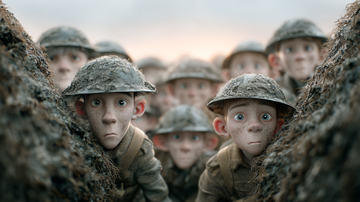
As the Second World War intensified, Huston volunteered for the U.S. Army in 1942 and made wartime documentaries as a military filmmaker. He directed four documentary films, including *Report from the Aleutians*, *The Battle of San Pietro*, and *Let There Be Light*, recording the realities of the battlefield without embellishment. *The Battle of San Pietro* conveyed the brutal fighting on the front so vividly that U.S. military authorities cut its running time in half for being “too antiwar.”
Huston was furious at the censorship and is said to have declared that if he ever made a propagandistic war film, he should be shot. *Let There Be Light* was also suppressed by the military for many years and was not authorized for release until the early 1980s. These wartime experiences decisively influenced Huston’s rebellious spirit and the themes of his work. His subsequent films rarely offer simple praise of heroes or encouragement for war, instead containing a perspective that suggests human frailty and the futility of conflict.
The commitment to realism acquired through his military service directly influenced his visual style. Huston came to favor location shooting and continued pursuing authentic images, from filming deep in the Congo for *The African Queen* to shooting on the open sea for *Moby Dick*. The weight of the reality he witnessed on the battlefield gave his filmmaking profound persuasive force.
Breaking with Hollywood and Moving to Ireland

After the war, Huston released one masterpiece after another, including *The Treasure of the Sierra Madre*, *Key Largo*, and *The African Queen*, firmly establishing his place in Hollywood. When the Red Scare, or McCarthyism, swept the film industry from the late 1940s, however, Huston joined director William Wyler and others in forming the Committee for the First Amendment and campaigned to protect freedom of expression. Together with Bogart, Lauren Bacall, and others, he traveled to Washington, D.C., and criticized the government’s actions.
The public backlash was strong, and the movement was forced to disband within a short time. Huston was deeply disappointed, particularly when Bogart explained in a magazine that he had been duped into defending Communists. Huston later said he felt that the ideals of America had been lost in that era, expressing intense disgust toward his homeland under the whirlwind of McCarthyism. As his statement that he could not tolerate what McCarthy had done to America indicates, his patriotism was badly wounded.
In 1952 Huston bought a historic estate in western Ireland and decided to move there. He formally acquired Irish citizenship in 1964, effectively distancing himself from the Hollywood system. This choice spared him direct harm from the Red Scare, although stepping outside Hollywood’s mainstream also led to a period of uneven quality in his films. Even so, Huston chose the freedom to film what he wanted and continued working energetically until late in life.
An Enduring Legacy from a Half-Century Career

From the 1950s through the 1980s, Huston continued making films based abroad in places such as Ireland, Britain, and Mexico. With *The Man Who Would Be King* in 1975, he brought to the screen a Kipling adventure story he had long hoped to film and regained high critical regard. *Prizzi’s Honor* in 1985 brought his daughter Anjelica Huston the Academy Award for Best Supporting Actress, while at age 79 he himself became a nominee for Best Director and set a record as the oldest person nominated in that category.
In 1987, late in his life, Huston completed *The Dead*, based on James Joyce’s story, while in such poor health that he could not part with an oxygen tank. It was his final film, and he died that August at 81. Over a career spanning almost half a century, he directed 37 films and wrote the screenplay for many of them. He also had a striking presence as an actor, including his villainous role in *Chinatown*, and literally devoted his life to cinema. He received 14 Academy Award nominations over his lifetime and won two awards each for directing and screenwriting.
Huston’s legacy lives on in contemporary filmmakers. Masters such as Martin Scorsese, the Coen brothers, and Guillermo del Toro have openly acknowledged his influence. His body of work continues to inspire film fans and visual creators across generations, and the strength of its storytelling and depth of characterization remain undiminished. John Huston is forever inscribed in film history as an immortal master who made an immense contribution to film as a narrative art.
Related Articles to Read Next
The following articles and categories also explore related topics. Start with the areas you need to make it easier to connect your understanding of planning, shooting, editing, and AI use.
- Film Category
- Story-Driven Video Structure: How to Make Corporate Videos That Capture Viewers’ Hearts
- Junya Satō’s Cinematic World: Applying the Planning Power of Blockbusters to Video Production
- Cameron’s Spirit of Inquiry and Filmmaking: Applying Environmental and Deep-Sea Expression to Video Planning
Need Help with Video Production?
Connect readers with consultations on producing promotional videos with a strong sense of story. For specific advice on planning, shooting, editing, or using AI, please feel free to reach out through our contact page.
Get Information on Video Production and AI
Provide information on planning and structure, characterization, and promotional video. We also share the latest video production know-how and AI video tips through our newsletter.