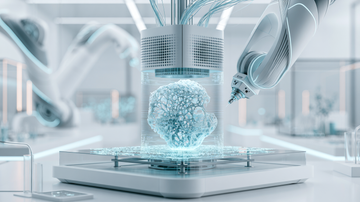

Innovations in Medical Video Technology and Their Applications
Video technology is bringing innovation to medical practice as well. From surgical simulation and remote consultations to educational uses, video plays a major role in deepening doctors' and patients' understanding and improving the quality of care. This article takes a closer look at applications of video technology in medicine and explores how the latest technologies are transforming healthcare.
The Role of Video in Surgical Simulation and Training
One of the most prominent applications of video technology is surgical simulation. By using video-based simulations to practice procedures before operating, doctors improve the success rates of actual surgery. Simulations using 3D modeling and virtual reality allow even complex operations to be practiced safely and are particularly important in training new doctors.
Introducing Video Technology into Telemedicine
Telemedicine is a field that has developed significantly through video technology. Video calls allow patients and doctors to hold remote consultations, providing high-quality medical services even across geographical distances. In remote surgery, combining robotics and video technology makes it possible to perform operations with specialists providing real-time guidance. This helps reduce disparities in healthcare and brings specialist care to more patients.
The Role of Video in Medical Education
Video technology is also highly effective in medical education. Compared with traditional text-based study, learning surgical procedures and dissection processes visually through video makes it easier for medical students to deepen their understanding. Interactive 3D models and animations also allow detailed study of the human body's structure and functions. Such video-based education improves comprehension and helps students acquire complex medical knowledge effectively.
Video Technology That Helps Improve Diagnostic Accuracy
Imaging technology is also used to improve diagnostic accuracy. Medical images such as CT scans and MRI reveal patients' internal structures with high precision, helping doctors make accurate diagnoses. Systems are also being developed that combine imaging with AI to automatically detect abnormalities in image data and enable early identification of disease.
The Importance of Surgical Recordings and Video Archives
Video recordings of operations are useful not only for education and research, but also as legal records and for preventing medical problems. Recording the entire procedure and allowing doctors to review it later makes it easier to identify areas for improvement. This advances surgical technique and risk management, raising the quality of care.
Conclusion
Video technology is used across many aspects of medicine, driving innovation in areas ranging from surgical simulation and telemedicine to education and improved diagnostic accuracy. Its medical applications will continue to develop alongside further technological advances. In the next part, we will explore the role and potential of video in education.
Related Articles to Explore
The following articles and categories also cover related topics. Start with the areas you need, and it will be easier to connect your understanding of planning, shooting, editing, and using AI.
- AI Technology Category
- Using Video Technology in Education: Basics for Learning and Training Videos
- Creating Interactive Educational Videos: Using Video Technology to Improve Learning Experiences
- AI Video Technology in Medicine: Perspectives for Healthcare Video Production
Need Help with Video Production?
Connect readers to consultations on producing video content for medicine, education, and training. For specific advice on planning, shooting, editing, or using AI, please visit our contact page to get in touch.
Receive Updates on Video Production and AI
Provide information on AI video production, educational videos, medical video, and VR applications. We also share the latest video production know-how and AI video tips in our newsletter.