
The Arrival of Virtual Actors: An Era with Digital Characters in Leading Roles
Actors have been central to stories in film, television, and games. With technological progress, however, an era is arriving in which virtual actors and digital characters take leading roles in place of real performers. Advances in computer graphics and the use of AI are creating more realistic digital characters with a growing presence. This article explores how virtual actors affect the industry and the possibilities and challenges they bring.
What Are Virtual Actors?
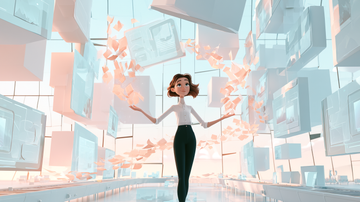
Virtual actors are digital characters generated using CG or AI. Created on computers rather than being real performers, their movements, expressions, and voices are often controlled by AI. Particularly used in films, games, and advertising, they employ digital technology to appear so realistic that they are difficult to distinguish from humans.
One representative example is Rogue One: A Star Wars Story (2016), which recreated a younger Peter Cushing through CG. The technology enabled a deceased actor to reappear in a film, making a strong impression on audiences. Virtual actors thus expand production possibilities.
The Benefits of Virtual Actors
Virtual actors offer several benefits. Digital characters never tire and can operate around the clock, freeing production from shooting schedules. They can also appear in perfect form regardless of age or health, removing the constraints of time and the body.
Virtual actors can also avoid risk when unusual situations or dangerous scenes are required. Action and fantasy films may demand extreme stunts or impossible scenes, but digital characters can readily meet such requirements. This allows actors' safety to be protected while maintaining narrative realism and impact.
Greater Realism through Advances in AI and CG
Advances in CG and AI have dramatically improved virtual actors' realism. AI controls movements and expressions more naturally, enabling human-like emotion. Combining motion capture with AI also faithfully reproduces realistic movements and expressions. Virtual actors are consequently appearing with realism that makes them difficult to distinguish from actual performers.
This technology is widely used in games and virtual reality as well as film and television. Game characters express emotion in real time while interacting with players, offering immersion like speaking with a real person. Further advances should increasingly blur boundaries between film and games and create new visual experiences.
Digital Characters across Diverse Fields
Virtual actors are active beyond film and games. Advertising, for example, now includes virtual influencers, with nonexistent characters promoting brands as their public face. CG-created influencers in particular can have millions of social followers and act as promotional figures through company collaborations.
Such characters are appealing options for companies because they carry less risk and can be freely customized to match brand image. Not needing to cast voice actors or performers also offers cost benefits. Virtual characters are expected to become active in even more fields.
Challenges Facing Virtual Actors
Virtual actors also face challenges. Technical barriers remain before they can fully replace real performers. Even with advances in CG and AI, there are limits to subtle human emotions, natural expressions, and improvised acting. How deeply virtual actors can move audiences in emotional film or theater scenes remains an issue.
Ethical issues are also emerging. Discussion includes how bereaved families and fans feel about digitally recreating deceased actors. Concerns that widespread virtual actors could reduce work for real performers also mean changes in the entertainment industry's employment structure cannot be ignored.
The Future of Virtual Actors
Virtual actors have great potential in the visual media industry. Continuing progress is expected to bring roles across education, medicine, advertising, and other fields, beyond film and games. Integration with VR and AR could particularly lead to virtual actors appearing in the real world and interacting directly with viewers.
As AI advances, virtual actors will also be able to learn and offer performances adapted to viewers. Improvising dialogue or adjusting expressions according to audience reactions, for example, should make films and games more interactive experiences.
Conclusion
Advancing digital technology is bringing a new revolution to visual media through virtual actors. Alongside replacing real performers in films and games, they have considerable influence in advertising and social media. Further advances are expected to transform entertainment's future. Ethical issues and technical limits remain, however, and how to address them will be an important theme.
Related Articles
The following articles and categories explore related topics in detail. Start with the areas you need, and it will be easier to connect your understanding of planning, shooting, editing, and using AI.
- AI Video Production Category
- Ways to Use AI Video Production Tools
- Using AI and Interactive Video
- Avatar Actors and AI Technology
Need Help with Video Production?
Connect readers to consultations on video planning using AI and digital characters. For specific advice on planning, shooting, editing, and using AI, visit our contact page and feel free to get in touch.
Receive Information on Video Production and AI
Provide a way to receive information on AI video production, virtual characters, and advertising videos. We also share the latest video production know-how and AI video production tips in our newsletter.