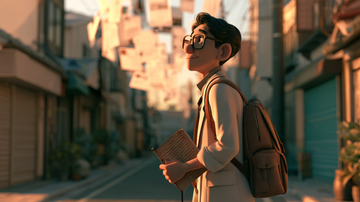

The Aesthetic Sensibility of East Asian Art and Animation
Traditional Japanese and Chinese art has had a profound influence on visual expression in animation. Japanese ukiyo-e and ink painting techniques, in particular, have brought a distinctive aesthetic sensibility to animation backgrounds and styles, earning high regard worldwide. This article explores how East Asian art has influenced animation and examines its aesthetic elements through specific examples.
Ukiyo-e and Animation
First, Japanese ukiyo-e plays an important role in the style of animation. Flourishing during the Edo period, ukiyo-e is known for simple lines, bold compositions, and vivid colors, and its designs have strongly influenced Japanese animation. For example, the backgrounds in Spirited Away show ukiyo-e-like use of lines and color balance. The landscapes and buildings in the film have a distinctive style influenced by ukiyo-e, creating a visually rich story.
Ukiyo-e is also characterized by flat depictions without the use of perspective. In animation, this quality is applied to distinctive spatial compositions that do not emphasize depth. For example, there are many scenes in which backgrounds appear closer than the characters or lack a sense of expanse. This is an important element in the visual construction of animation.
Aesthetic Expression in Chinese Ink-Wash Painting
Chinese ink-wash painting has greatly influenced soft, flowing movement and depictions using simple yet expressive lines. The beauty of negative space, in particular, is used effectively to balance stillness and motion in animation. For example, in Nausicaa of the Valley of the Wind, vast natural landscapes and moments of silence are depicted with an ink-wash-like touch that highlights their beauty. The use of negative space in ink-wash painting is an extremely important technique for expressing space and the passage of time in animation.
Color in East Asian Art and Animation
The influence of East Asian art also extends to the use of color. The strong contrasts of ukiyo-e and the subtle gradients of ink painting enrich color expression in animation and enhance the depth of a story. This balance of color serves not only to create visual beauty but also to heighten emotional expression.
Harmony with Nature and Storytelling
The influence of East Asian art on animation is not limited to visual style. Harmony and coexistence with nature are philosophical values in East Asian art that deeply influence narrative development and characters' emotional expression in animation. For example, Studio Ghibli's Princess Mononoke explores conflict and harmony between humans and nature. This theme reflects the coexistence of nature and humanity in East Asian art, giving the work philosophical depth.
Conclusion
Traditional Japanese and Chinese art has strongly influenced both visual expression and narrative structure in animation. The lines and compositions of ukiyo-e and the beauty of negative space in Chinese ink-wash painting give animation distinctive aesthetic elements. In addition, the philosophical theme of harmony with nature, rooted in East Asian art, has a profound influence on the worlds of animation. These elements show the substantial impact of East Asian art on animation, both visually and philosophically.