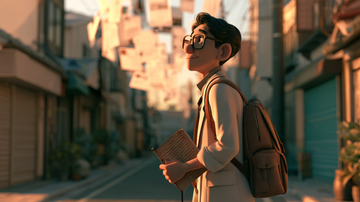

Renaissance painting, which flourished in Europe during the 15th and 16th centuries, brought innovations particularly in perspective and naturalistic expression. These techniques have also profoundly influenced contemporary visual works, forming a foundation for visual expression in film and television. Here, we examine features of visual expression shared by moving images and Renaissance painting.
1. Perspective and the Representation of Space
Renaissance painters used linear perspective to create a sense of depth on a flat surface. This gives viewers the feeling of having stepped into the painting. The technique is equally important in contemporary visual works. Films use camerawork to emphasize spatial depth and give scenes a sense of breadth, drawing audiences into the experience. Adjusting subjects' positions and distances to highlight important elements of a story is another technique that moving images share with Renaissance perspective.
2. Dramatic Use of Light and Shadow
Another important innovation of the Renaissance was the contrast between light and shadow. Painters such as Caravaggio used chiaroscuro to create dramatic effects. In contemporary visual works too, lighting is essential for emphasizing the emotions and tension of a scene. For example, strong contrasts are often used in film noir and suspense films to portray characters' inner conflicts. Light and shadow thus play an important role in both Renaissance painting and contemporary moving images.
3. Composition and Balance
Composition in Renaissance painting emphasized balance and symmetry. Leonardo da Vinci and Raphael carefully arranged figures and objects in pursuit of visual harmony. This sense of balance is also important in moving images. Directors and cinematographers pay close attention to composition, considering how to position characters and objects within the frame. Symmetry can visually convey a character's central place in the story or highlight the beauty of the image as a whole.
4. Portraying People and Expressing Emotion
Renaissance painting placed great importance on expressing human emotions. In the works of Michelangelo and Raphael, emotions are depicted subtly through people's expressions and postures, evoking empathy in viewers. Contemporary visual works likewise communicate emotions visually through actors' expressions and gestures. Close-ups are particularly effective at emphasizing a character's emotions and giving audiences a strong sense of their inner life. Here too, Renaissance emotional expression and filmmaking techniques share common ground.
Conclusion
Renaissance painting techniques continue to exert a major influence on contemporary visual expression. Elements such as perspective, light and shadow, composition, and emotional expression are used as fundamental techniques in the visual language of film and television. Understanding what Renaissance painting and moving images have in common offers deeper insight into how visual works have developed and the techniques used to communicate stories and emotions visually.