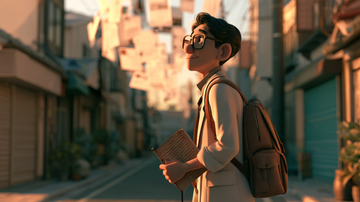

An Urban Story from Shochiku

Produced by Shochiku in 1953, Amai Himitsu was directed by Kozaburo Yoshimura. Set against Japanese society during postwar reconstruction, it portrays the daily lives and subtle emotions of people living in the city and is known for showcasing Yoshimura's delicate direction. The urban sophistication characteristic of Shochiku's Ofuna style at the time is beautifully balanced with an attentive depiction of the nuances of human relationships.
The Directorial Skill of Yoshimura and His Team

Yoshimura's abilities are fully demonstrated in this film, particularly in its portrayal of the characters' inner lives. The camerawork is restrained yet effective, capturing expressions and gestures with care to convey emotions beyond words. Effective use of urban scenery also skillfully evokes the atmosphere of 1950s Tokyo, where the story takes place.
Resonating with the Postwar Era

Beyond telling a story, Amai Himitsu also serves as a mirror of social change in postwar Japan. New urban lifestyles, changing relationships, and generational differences in values are among the challenges facing Japanese society at the time that are skillfully woven into the story's background. It is a fine example of the delicate balance between social engagement and entertainment in which Yoshimura excelled.
Its Place in Shochiku Cinema

The film is regarded as one of the representative works of Shochiku Ofuna's golden age. Its portrayal of human drama in an urban setting in particular had a major influence on later Shochiku films. Yoshimura's characteristic restraint and delicate psychological portrayal also influenced other directors of the period and contributed to establishing a genre of films for adults in Japanese cinema. Amai Himitsu holds an important place in film history as one of the achievements of the new cinematic expression sought by postwar Shochiku.