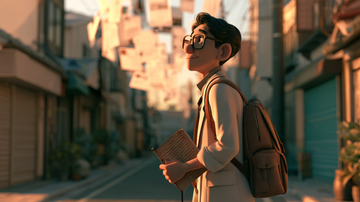

A Passion for Cinema Nurtured in Osaka's Working-Class Neighborhoods

Born in Ikuno Ward, Osaka, in 1952, Kazuyuki Izutsu grew up in the lively atmosphere of a postwar working-class neighborhood. A frequent cinema visitor from childhood who often encountered films by Akira Kurosawa and Yasujiro Ozu, he developed a strong desire to express his own formative experiences through moving images. In high school, he acquired an 8 mm camera and began making independent films with friends. These experiences formed the basis of his later style. Osaka's everyday sensibility, and the warmth and humor that arise from it, live on as important elements of his films.
Entering Cinema and Early Struggles

After graduating from university, Izutsu committed himself to filmmaking and began working as an assistant director at a production studio in Kyoto. Japanese cinema was undergoing a transition, with the spread of television contributing to a shrinking film industry. In these difficult conditions, he steadily accumulated experience and learned filmmaking fundamentals. His assistant-director years were an important period in which he closely observed different directors' methods and formed his own cinematic language. The on-set experience and connections he developed would later open the way to independent production. In particular, the methods of expressing realism he learned on yakuza-film sets became a distinctive element of his work.
Establishing His Own Style and Gaining International Recognition

After releasing his directorial debut in 1983 at the age of 31, Izutsu continued to attract attention with socially satirical works. From the late 1980s through the 1990s, he brought a fresh voice to Japanese cinema through social comedies centered on lawyers and national-tax investigators. Along with fine performances from actors such as Nobuko Miyamoto, these films were praised for their incisive approach to power and corruption. From the late 1990s into the early 2000s, he gained international recognition, including the Cannes Palme d'Or for a work co-written with director Shohei Imamura. His period films in the 2000s received further acclaim at Cannes and brought a fresh perspective to traditional period drama. His work is characterized by lively dialogue using the Osaka dialect, sharp satire of social contradictions, and stories told from ordinary people's perspectives.
Influence on the Next Generation and an Undiminished Creative Passion

As his career developed, Izutsu also devoted more effort to nurturing young filmmakers. Drawing on his own experience, he teaches the importance of an individual perspective and passes on his knowledge through filmmaking workshops and seminars. He also responds flexibly to changes brought by digital technology and continues exploring new forms of expression. His achievements lie not only in making outstanding works but in expanding the possibilities of Japanese cinema and enhancing its international reputation. Still actively creating, he remains an important presence in Japanese film. His unpretentious personality and pure love of cinema continue to influence many people.