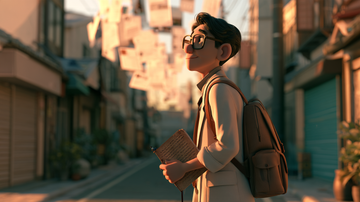
His First Steps into Cinema

Kenji Mizoguchi was born in Ginza, Tokyo in 1898. He spent his early childhood in a relatively affluent household, but the failure of his father's business dramatically changed his life. Experiencing poverty and conflict within the family, he confronted society's harshness and irrationality from an early age. These experiences would later inform his realistic human dramas and sharp eye for society. He eventually developed an interest in art and took work in design, but his growing interest in cinema led him to begin as an assistant director in the 1920s.
Challenges and Conflicts as a Director

Mizoguchi made his directorial debut in 1923 at the age of 25, but his early films were largely melodramas that prioritized entertainment. The filming techniques and directing methods he developed then, however, would be applied in his later style. Particularly noteworthy is his perspective on films about women. At a time when women were usually portrayed onscreen as passive figures or foils for men, Mizoguchi earnestly observed their inner strength and sorrow and sought to present them realistically. Deep empathy for women oppressed within society and a critical perspective came to define his style.
Talent Shining Amid the Shadows of War and Reconstruction

Mizoguchi entered his mature period in the late 1930s. Sisters of the Gion (1936) and Osaka Elegy (1936) made him known as a leading director of films about women, but the era moved toward war, casting a shadow over the film industry as well. He was forced into difficult circumstances during the war, including making propaganda films, but his talent flourished further afterward. In The Life of Oharu (1952) and Ugetsu (1953), he perfected long takes and tracking shots, creating works that brought narrative depth together with visual beauty. Ugetsu in particular won an award at the Venice International Film Festival and earned high praise throughout world cinema.
Lasting Achievements in Film History

Although Kenji Mizoguchi died in 1956 at the young age of 58, his films became a radiant legacy in cinema history. While portraying social contradictions and human sorrow, his films sought beauty and truth within them. Many directors respected him and studied his techniques. The human truth Mizoguchi sought continues to question us across the ages.
(Some images and thumbnails in this article are illustrative images created using generative AI. Please note that they may differ from actual people, places, or objects.)